My old OnePlus 5 battery started giving out and I’d been a OnePlus person for years, so it wasn’t a hard sell to me in principle to get an updated version of it. However when I actually had it in my hands and read up on what they’d done to the software, the direction OxygenOS had gone after the merge with Oppo’s ColorOS, and it wasn’t the comforting OS I thought I was buying. I sent it back, and ended up with a Samsung S24+, and the reason I settled on it wasn’t the camera or the screen, it was that Samsung had put a number on how long they’d keep updating it: seven years of OS and security updates, committed from January 2024, which is when the S24 line launched, a number I’d looked up before I bought it and the actual deciding factor.
It’s certainly an odd reason to buy a phone when you think about it. A spec sheet will tell you what a device can do, and I barely looked at it apart from fast charging. What I really wanted to know was how long the device would still be mine to use, and that number isn’t normally printed on the box.
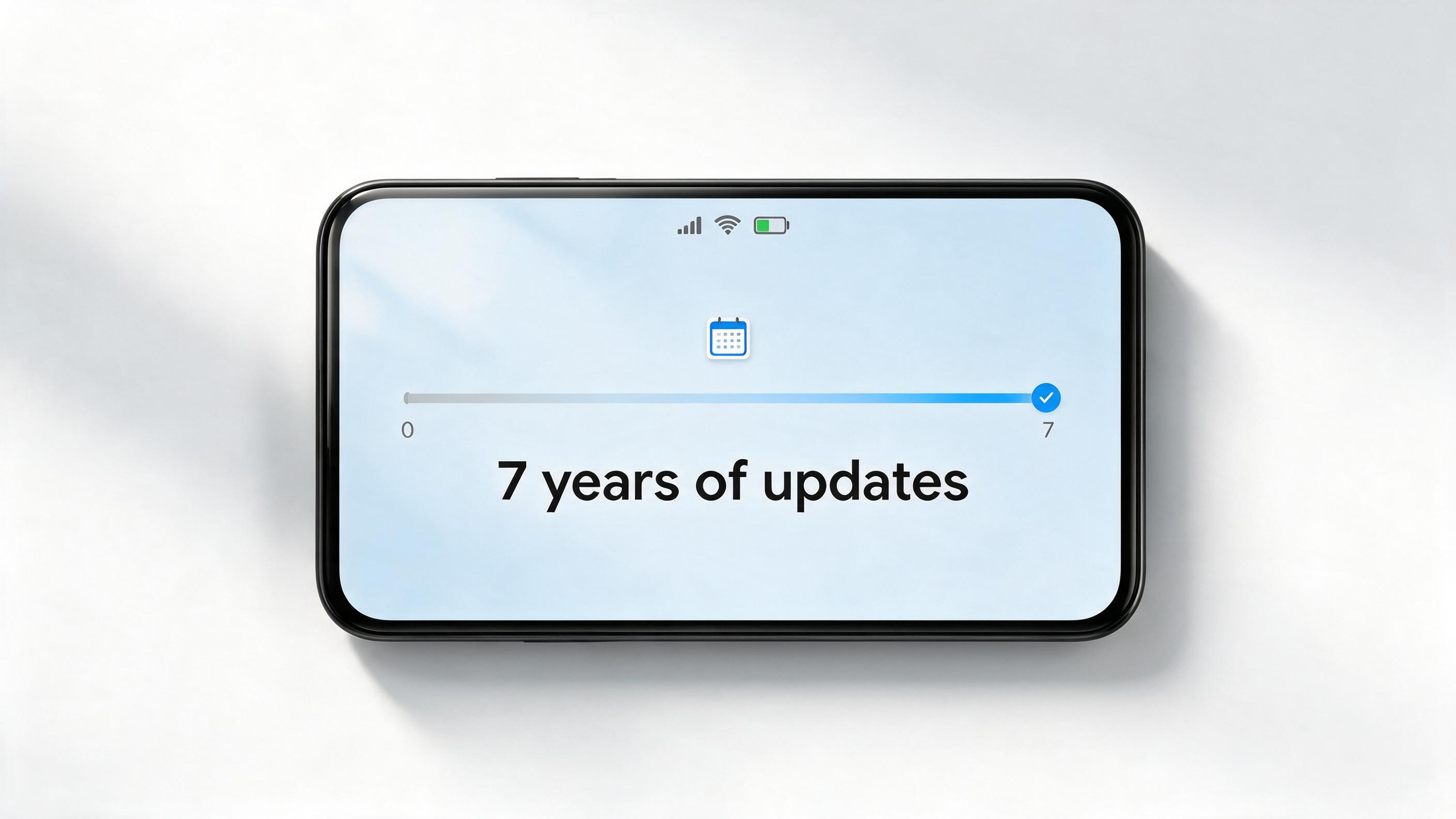
The deciding specification was not what the phone could do on day one, but how long the company promised to keep it usable.
The more I bought on that basis, the more I noticed it was the only question that mattered. The hardware working was never in doubt with any of this. Working and usable have come apart, because there’s a company sitting between me and what I paid for; the company gets to decide whether it keeps going. It happens in two ways, and they’re worth keeping independent because they feel different when they land on you.
The first is that the company stops standing behind something and it degrades or dies. Google did this to the first and second generation Nest Learning Thermostats last October, an item wired into people’s heating and screwed to the wall. They still have basic function, but the app control, scheduling and remote adjustment, the parts that made it a smart thermostat and not a dial, got switched off on the 25th of October 2025. Google also said it’s done selling new Nest thermostats in Europe entirely. This isn’t new for them; they bricked the Revolv hub outright back in 2016, a device people had paid three hundred dollars for. It’s not a new pattern but the frequency it happens has grown and it now covers more or less anything with a chip in it.
The iPhone version of this is the interesting one, because it isn’t obviously villainous. In 2017 Apple started slowing down older iPhones through an iOS update, and when people worked out what was happening there was a lot of noise about planned obsolescence. Apple’s actual reason held up, more or less: the older batteries couldn’t handle peak power draw and the phones were shutting down unexpectedly, and so throttling the processor kept them alive. There was a real engineering problem and the fix was defensible. What people were actually objecting to was consent on changes to their devices. It’s a narrower claim than the harm cases, and it doesn’t need the company to be wrong. Even when the company is right, the thing you own can change overnight because of a decision you had no part in, and that’s the violation, separate from whether the change itself did you any damage.
The enterprise version of the same move is Windows 10, and this is the one I actually deal with. Support ended on the 14th of October 2025. The machines didn’t stop working that day, but the Microsoft requirement for Windows 11’s minimum hardware is something a lot of older machines don’t have, a TPM 2.0 security chip. If you don’t clear that bar you’re on an operating system that no longer gets security updates. PIRG estimated up to 400 million PCs worldwide couldn’t make the jump, though that’s an order-of-magnitude figure built on top of other estimates, and so I’d hold it loosely. For my personal machine I got the extra year at home because the EU leaned on Microsoft and they extended free updates for another year in the EEA, which bought me time and changed nothing about where it ends. I’m brought in on the enterprise side of exactly this, client estates full of machines that run perfectly and are a support cliff away from being a problem, and the issue that decides their lifespan isn’t whether they work. It’s a hardware stipulation Microsoft set, justified on security, that happens to also mean a lot of hardware and software gets bought. An organisation doesn’t own the lifespan of its own estate any more than I own my phone’s.
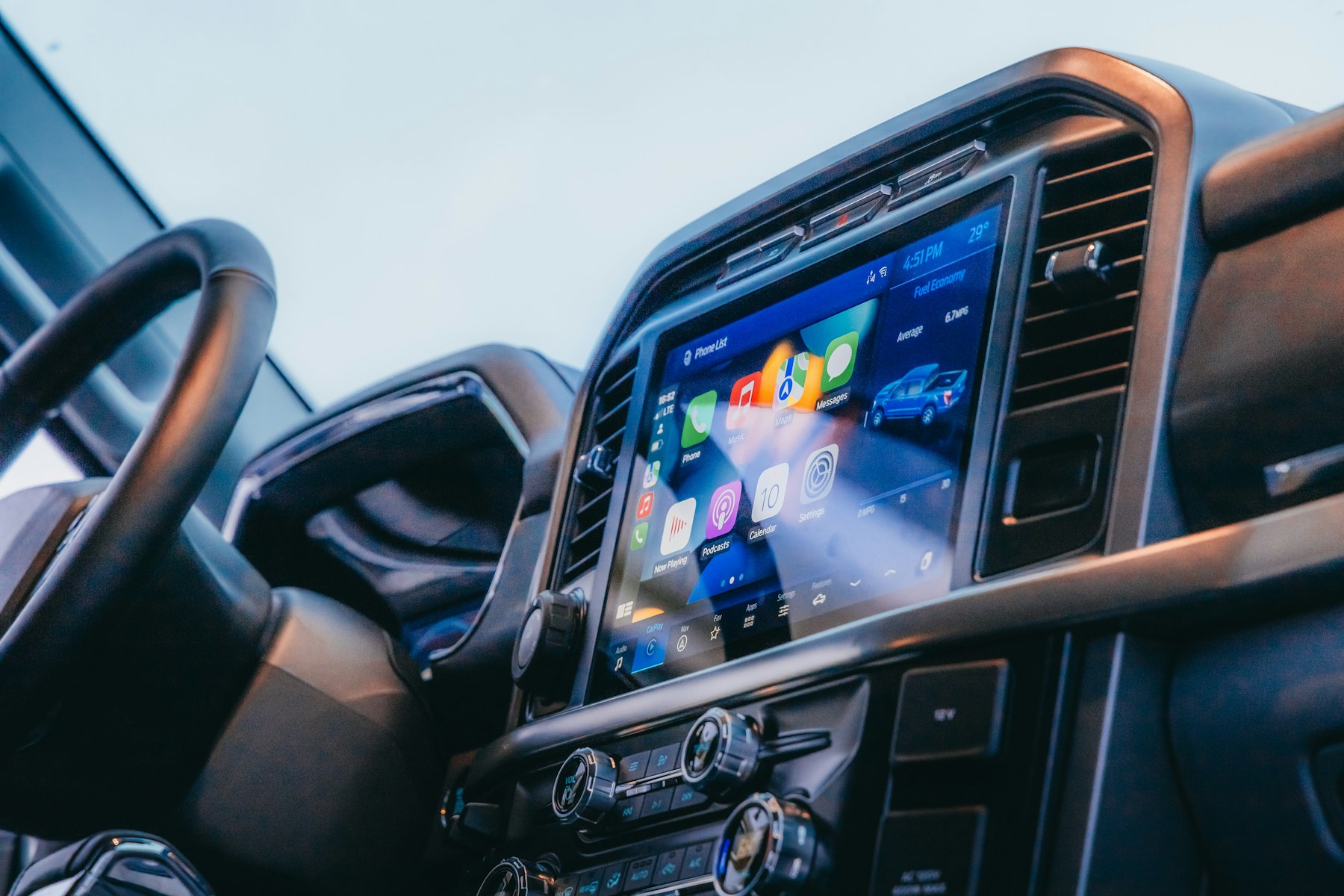
The screen belongs to the car until the manufacturer decides it is also advertising space.
Yet, the second way is different, and I think it’s worse, because the product works perfectly and they intervene anyway. A few years ago BMW tried charging a monthly subscription ($18), to turn on heated seats that were already built into the car, and that went down badly enough that they dropped it in 2023. Then in December 2023 a BMW executive said on the record that they wouldn’t put ads on the in-car screens, that the cabin was a “private space”. On the 27th of July this year they pushed a Spider-Man film advert to the dashboards of cars built after 2020, over the air, a banner when you start the car that opens into a full animation with the lighting and the sound. Your “private space” was only yours, it seems, if you had bought a car before 2020. If not, the screen you’d paid for was theirs to sell, after they’d said it wasn’t.
The one that caught me out was the Steam Deck, on a flight with a game I’d already paid for. I got it out to play something, and it wouldn’t start, because it wanted to phone home and confirm I owned the game. There was obviously no internet on the plane and the game was installed and I’d paid for it. None of that mattered, because a Steam game is a licence and not something you own.
Sadly home games consoles are heading the same way, and being fairly open about it. Sony announced in July that it’ll stop making physical discs for new PlayStation games from January 2028. And on the 27th of July, the same week as BMW’s Spider-Man ads, an Xbox outage locked people out of games for around fifteen hours, including, for some people, games they had on disc, sitting in the console. Microsoft said afterwards that discs shouldn’t have been affected and it was a fault in the entitlement check and not the intended behaviour, which I believe, and that is somehow more unsettling.
It would be nice to have a rule for spotting which companies will do this, so I could screen for it when I buy. Different companies, different mechanisms, different justifications, some defensible and some not, all arriving at the equivalent result, which is that the item you paid for is running on someone else’s terms. You should ask the question before you buy. Sometimes there’s an answer, like Samsung’s seven years, and I bought on it. Most of the time there isn’t and you can’t really tell in advance, so the only option is to assume it’s the default now and buy accordingly.